Table Of Content

The Three-Item Loneliness Scale displayed satisfactory reliability and both concurrent and discriminant validity. Moreover, the three-item telephone version corresponds to the scale formed from the same three items when asked in the full in-person scale. Because most large-scale surveys rely on probability samples of the U.S. population, knowing that both the three-item and full scales work in the general population is important.
What Is Concurrent Validity?
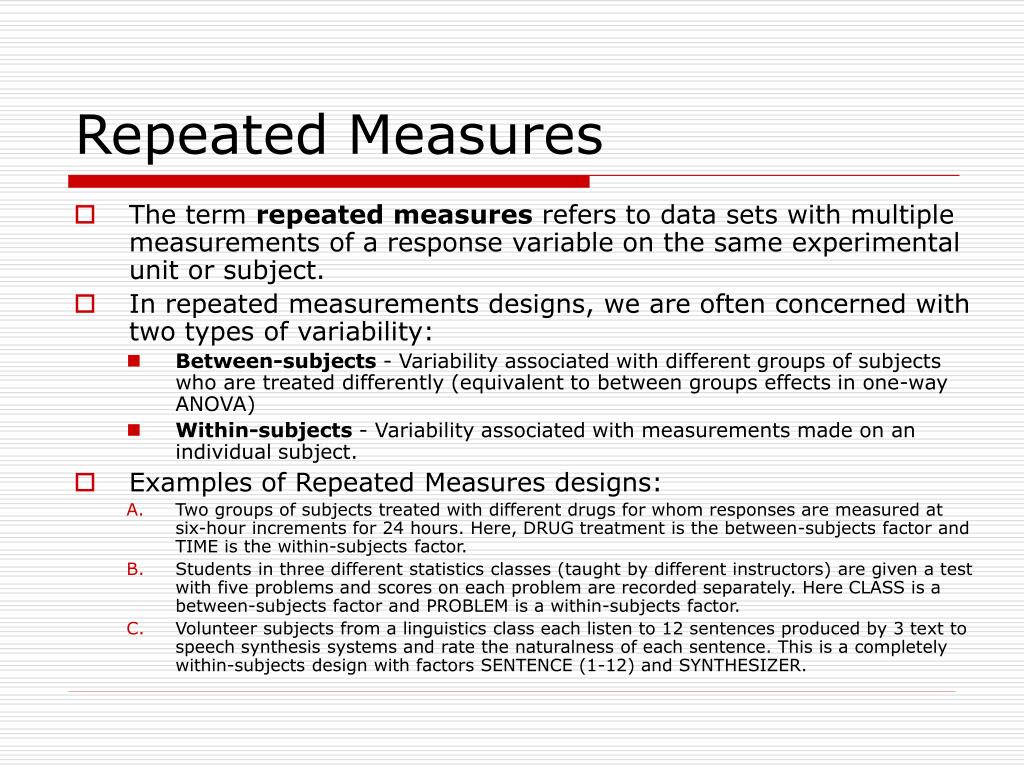
Two research components are independent, if their implementation does not depend on the results of data analysis in the other component. A researcher could analyze interview data and questionnaire data of one inquiry independently; in that case, the research activities would be independent. It is also possible to let the interview questions depend upon the outcomes of the analysis of the questionnaire data (or vice versa); in that case, research activities are performed dependently. Similarly, the empirical outcome/effect and process in a study with the purpose of expansion might be investigated independently, or the process study might take the effect/outcome as given (dependent). In this context, concurrent validity involves comparing scores on the questionnaire with scores from other measures that should be related, such as clinician-rated symptom scales or diagnostic interviews based on DSM criteria. Repeated measures designs have some disadvantages compared to designs that have independent groups.
An Introduction to Research Methods for Undergraduate Health Profession Students
In a meta-analysis of risk factors for loneliness in adulthood and old age, Pinquart and Sorensen (2003) estimated that approximately 10% of older adults complain of frequent feelings of loneliness. Situational threats to a valued interpersonal relationship ranging from social exclusion, ostracism, rejection, separation, divorce, to bereavement are known to elevate feelings of loneliness. Weiss (1973), for instance, found that a spouse following his or her partner through a series of job transfers may be low in loneliness and well adjusted in one town but lonely and poorly adjusted in another.
Child wasting and concurrent stunting in low- and middle-income countries - Nature.com
Child wasting and concurrent stunting in low- and middle-income countries.
Posted: Wed, 13 Sep 2023 07:00:00 GMT [source]
Associated Data
The across-tier comparison provides another possible source of control for maturation. If we observe a potential treatment effect in one tier and corresponding changes in untreated tiers after similar amounts of time (i.e., number of days), maturation becomes a more plausible alternative explanation of the initial potential treatment effect. On the other hand, if we observe that one tier shows a change whereas other tiers that have been observed for similar amounts of time do not show similar changes, this may reduce the plausibility of the maturation threat. The assumption that maturation contacted all tiers is strong—participants were all exposed to maturational variables (i.e., unidentified biological events and environmental interactions) for the same amount of time.
For example, Carr and colleagues reported survey findings in the first half of the results section and the qualitative results about contextual factors in a subsequent part of the report (Carr 2000). In their study of a quality improvement approach for implementing evidence-based employment services at specialty mental health clinics, Hamilton and colleagues used this approach but differ by presenting the qualitative results first and the quantitative results second (Hamilton et al. 2013). The staged approach to integration often occurs in multistage mixed methods studies when the results of each step are reported in stages as the data are analyzed and published separately. For example, Wilson and colleagues used an intervention mixed methods framework involving a clinical trial of usual care, nicotine gum, and gum plus counseling on smoking cessation (Wilson et al. 1988). They also used interviews to find the meaning patients attributed to their stopping smoking (Willms 1991).
About the Program
We would not expect the distributions in the two studies to be identical; CHASRS is an urban sample from one city, whereas the HRS is a national sample of a wider age range. However, the differences between the samples are generally as expected (e.g., higher levels of education in CHASRS) and rather modest. The target population for Study 2 was White, Black, and Hispanic persons between the ages of 50 and 67 living in Cook County, Illinois, who were sufficiently ambulatory to come to the University of Chicago for a daylong visit to the laboratory. The sample was selected using a multistage probability design in which Blacks and Hispanics were oversampled and gender equality maintained. First, a sample of households was selected, then sampled households were screened by telephone for the presence of an age-eligible person.
The qualitative data allowed for a more nuanced understanding of the research question and helped the researchers to identify the key factors that influence the success of PARS. This design helped the authors to develop a robust and accurate understanding of a complex phenomenon and provided insights that can inform the development of interventions and policies to improve patient care and the efficiency of PARS. In the final report, the quantitative data integration uses a narrative approach that describes the quantitative and qualitative results thematically. The specific type of narrative integration is weaving because the results are connected to each other thematically, and the qualitative and quantitative data weave back and forth around similar themes or concepts.
Inline dynamometry provides reliable measurements of quadriceps strength in healthy and ACL-reconstructed ... - ScienceDirect.com
Inline dynamometry provides reliable measurements of quadriceps strength in healthy and ACL-reconstructed ....
Posted: Sat, 23 Dec 2023 22:06:18 GMT [source]
In all cases, the mixing of methods, methodologies, and/or paradigms will help answer the research questions and make improvements over a more basic study design. The number of possible purposes for mixing is very large and is increasing; hence, it is not possible to provide an exhaustive list. Greene et al.’s (1989) purposes, Bryman’s (2006) rationales, and our examples of a diversity of views were formulated as classifications on the basis of examination of many existing research studies.
Achieving Integration in Mixed Methods Designs—Principles and Practices
Coincidental events include divorce, changing of living situation, changes in school or work schedule, physical injury, changes in a setting such as construction, changes in coworkers or staffing, and many others. Coincidental events share the characteristic that their behavioral impact is expected to be a function of particular dates. Controlling for coincidental events requires attention to the specific dates on which events occur. However, the four possible points of integration used by Teddlie and Tashakkori (2009) are still too coarse to distinguish some types of mixing. Mixing in the experiential stage can take many different forms, for example the use of cognitive interviews to improve a questionnaire (tool development), or selecting people for an interview on the basis of the results of a questionnaire (sampling).
Overall, the study design provided evidence for the motivating effects of Competence and Relatedness in relation to medical students doing research. In this particular study, the researchers were able to not only identify the factors that motivate and demotivate medical students to do research but also gain an in-depth understanding of why those factors were important. The study design also increased the validity of the research as the limitations of the survey data were addressed by using qualitative data to provide a more in-depth understanding of the research question.
Most studies of social relationships in later life focus on the amount of social contact, not on individuals' perceptions of social isolation. A major limiting factor in studying loneliness has been the lack of a measure suitable for large-scale social surveys. This article describes a short loneliness scale developed specifically for use on a telephone survey. The scale has three items and a simplified set of response categories but appears to measure overall loneliness quite well. The authors also document the relationship between loneliness and several commonly used measures of objective social isolation.


No comments:
Post a Comment